Yves Günther · 24 September 2026
The Unseen Impact of Infrastructure Tweaks on Regional Community Sites in Woodland Areas
Regional community sites serving woodland areas often operate under conditions shaped by gradual shifts in both physical and digital infrastructure, where small modifications produce effects that extend well beyond initial project scopes. These tweaks include fiber optic extensions, power grid stabilizations, and server relocations that alter how local websites handle traffic from residents, visitors, and organizations tied to forested regions. Data collected across multiple jurisdictions shows that such changes influence site performance, user access patterns, and long-term content visibility in ways that accumulate over months rather than appearing immediately.
Physical Infrastructure Adjustments in Forested Zones
Woodland communities rely on infrastructure that must contend with seasonal weather patterns, terrain challenges, and environmental regulations that govern construction near protected lands. When utility providers install upgraded transmission lines or backup generators, community websites experience corresponding shifts in uptime and loading speeds because local hosting often depends on the same regional power and connectivity grids. Observers note that sites hosted on servers tied to these grids register fewer interruptions after stabilization projects, yet the transition period itself creates temporary spikes in error rates as traffic reroutes through new pathways.
Studies from research institutions tracking rural connectivity indicate that power reliability improvements in September 2026 across parts of the Pacific Northwest correlated with measurable reductions in downtime for local event calendars and resource directories. Those improvements followed targeted investments documented by the Canadian Radio-television and Telecommunications Commission, which reported expanded coverage in similar woodland corridors during the same timeframe. Community platforms that publish trail conditions, volunteer schedules, and emergency alerts therefore gained consistency, although administrators had to recalibrate caching systems to match the new latency profiles.
Digital Network Changes and Their Reach
Beyond physical utilities, adjustments to content delivery networks and domain resolution services reshape how regional sites appear in search results and load for users in remote woodland locations. When providers alter routing tables or introduce new edge servers closer to forested service areas, pages that once ranked steadily for location-specific queries sometimes drop or rise without corresponding content updates. Figures from academic analyses of rural digital ecosystems reveal that these network-level modifications affect bounce rates and session durations on community forums, particularly those covering conservation efforts or seasonal tourism.
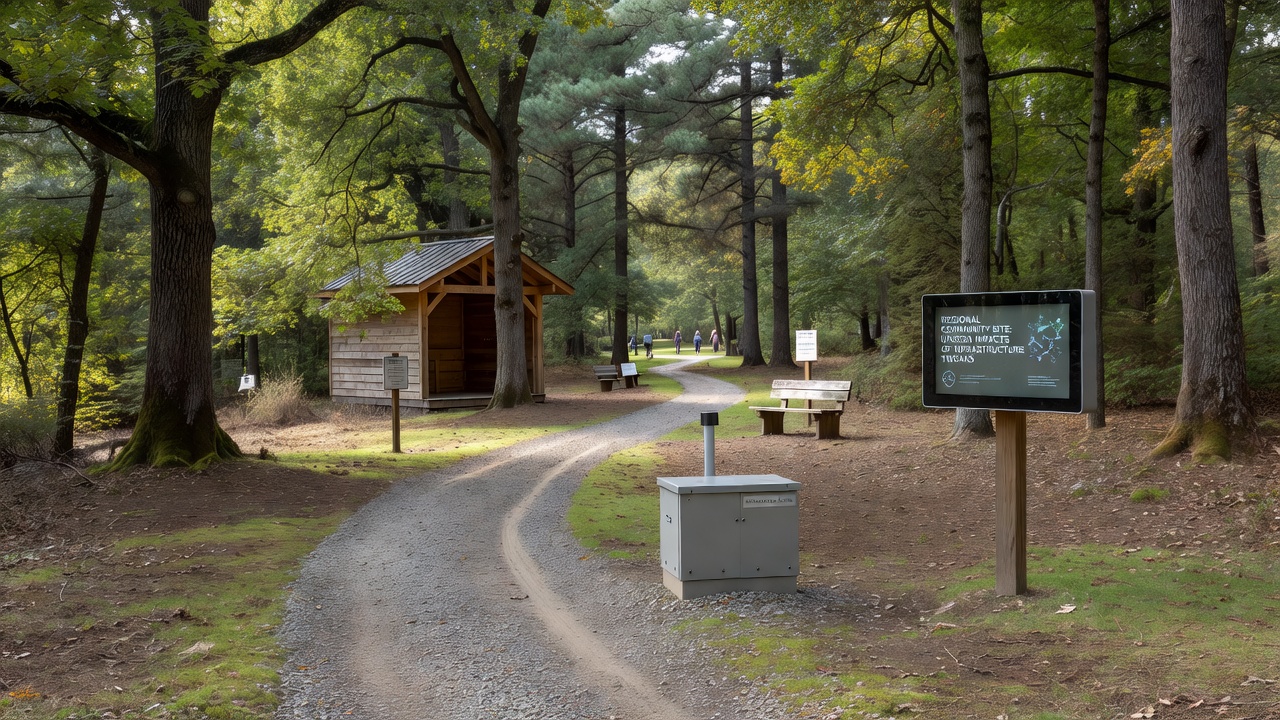
One documented instance involved a cooperative site in the Appalachian foothills that maintained trail maps and lodge listings; after its primary host migrated traffic through an updated regional node, the platform saw a sustained increase in mobile sessions from nearby towns. Researchers at a European university consortium tracking similar migrations across comparable terrain found parallel patterns where search engine indexing responded to altered crawl frequencies once latency decreased. The adjustments did not require site owners to change code or design elements, yet visibility metrics shifted noticeably within eight weeks of the infrastructure update.
Effects on Local Engagement and Information Flow
Community sites function as hubs for announcements, resource sharing, and coordination among residents who may lack consistent broadband alternatives. When infrastructure tweaks modify upload speeds or introduce new security protocols at the network edge, organizations posting time-sensitive information such as wildfire updates or trail closures encounter different propagation speeds. Reports compiled by the Australian Communications and Media Authority highlight how connectivity enhancements in comparable woodland districts altered the timing of public alerts, prompting site managers to adjust posting schedules and backup distribution methods through email lists or radio cross-promotions.
Those managing volunteer coordination platforms often discover that faster baseline connections reduce the need for compressed image formats, allowing richer visual documentation of local projects. At the same time, the same improvements can increase exposure to automated scraping tools, requiring additional moderation layers that were previously unnecessary. Data from these regions shows mixed outcomes: participation metrics rise on sites that adapt quickly, while others experience plateaus until administrators implement revised access controls.
Long-Term Patterns Across Multiple Sites
Longitudinal observations compiled by independent research groups demonstrate that repeated minor infrastructure modifications compound into larger accessibility differences between woodland community sites and their urban counterparts. Sites that integrate monitoring tools early in each upgrade cycle maintain steadier performance records, whereas those reacting after the fact register cumulative losses in archived content reach. Government datasets from multiple agencies confirm that these disparities appear most clearly in metrics tied to seasonal usage peaks, such as summer tourism inquiries or winter emergency reporting.
Site operators who coordinate with regional infrastructure planners ahead of scheduled work gain advance notice of potential traffic rerouting, enabling preemptive testing. This preparatory approach appears in records from several North American and European woodland districts where community platforms maintained higher reliability scores during transition windows. The pattern underscores how information exchange between technical teams and local administrators influences outcomes more than any single tweak in isolation.
Conclusion
Infrastructure modifications in woodland regions continue to shape the operational realities of community websites through interconnected physical and digital pathways. Evidence from regulatory reports, academic studies, and usage data illustrates that these effects unfold gradually, influencing access consistency, content visibility, and information distribution without requiring direct intervention at the site level. Organizations tracking developments across jurisdictions document recurring patterns where preparation and cross-sector coordination determine how readily platforms adapt to each successive adjustment.